Utilization Gains and Purchasing Savings: Use the Right Basis
In a hypothetical change from 94.5% to 99.6% utilization, the gain is 5.1 percentage points. For 1,000 tonnes of qualified finished demand, input falls from about 1,058.20t to 1,004.02t, saving about 54.18t. These are illustrative figures, not project results.
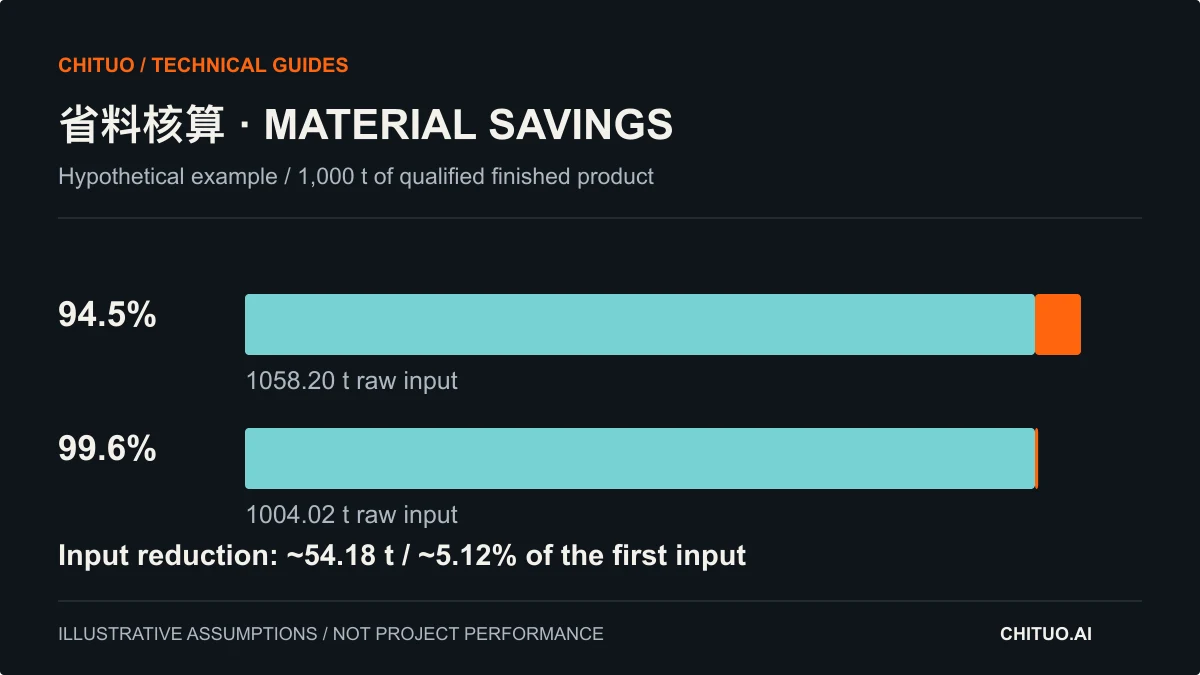
Start by deciding whether the comparison fixes raw input or finished demand. The two methods answer different questions. The 94.5% and 99.6% values below are hypothetical teaching assumptions, not standard manual-shop performance or Chituo project results.
Divide fixed demand by utilization
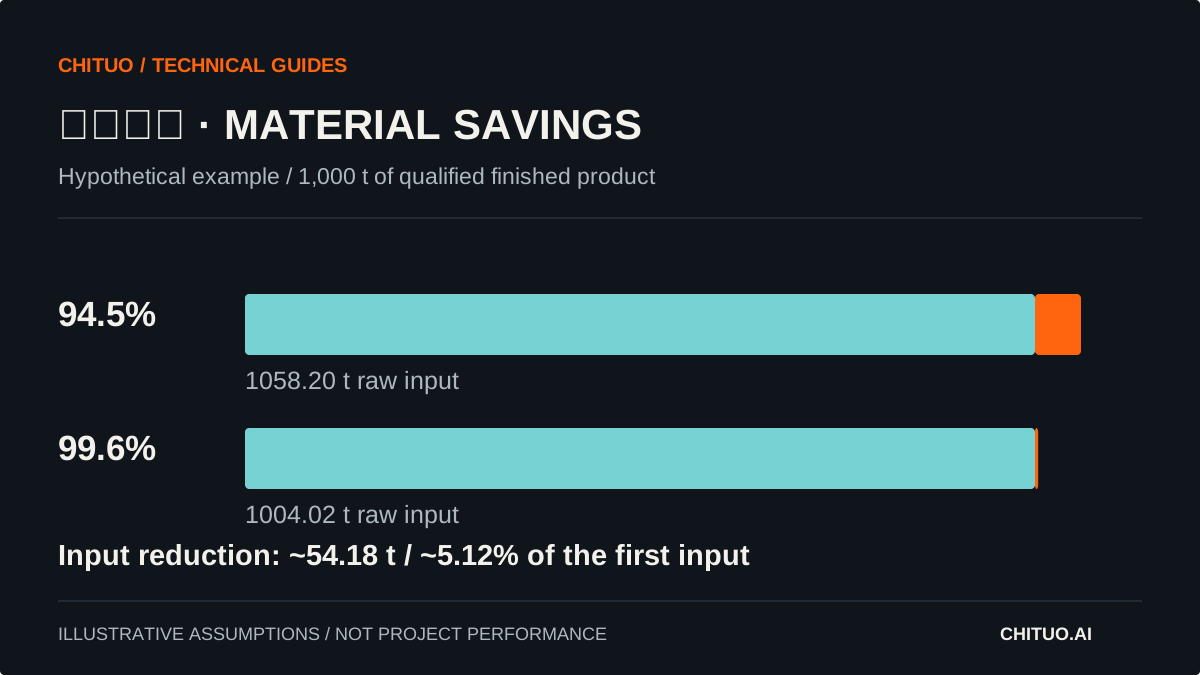
Here, utilization means qualified finished weight divided by raw input weight.
| Item | Option A | Option B |
|---|---|---|
| Qualified finished demand | 1,000t | 1,000t |
| Assumed utilization | 94.5% | 99.6% |
| Input = demand / utilization | 1,058.20t | 1,004.02t |
Using unrounded figures, the input difference is about 54.18t, or 5.12% of Option A’s input. The utilization gain is 5.1 percentage points. If both options instead receive 1,000t of input, their outputs are 945t and 996t: a 51t output difference.
Keep remnants and money separate
Reusable remnants remain inventory. A measure that includes reusable remnants is not the same as finished-product utilization. Use the same theoretical or measured weight basis on both sides.
Multiplying the input difference by a steel price estimates part of the purchasing change. Net project benefit also depends on remnant value, custom-length premiums, freight, inventory and equipment or software costs.
Compare against your previous cutting plan
Use the same anonymized cut list, the previous patterns, the proposed patterns and the destination of remaining material. Without an old plan, compare stock-length options first rather than inventing a manual-waste baseline.
Scan the WeChat QR code to chat with us anytime
Run our Triple-Optimization Calculator with your bar list, or scan the WeChat QR code / call us directly for a tailored bay layout and quotation.