How to Verify a 6t/h Rebar-Line Trial
State input, qualified output, timing boundaries and the diameter mix. Processing about two tonnes in 20 minutes corresponds to 6t/h for that trial scope. Shift output must also account for changeovers, maintenance and interruptions.
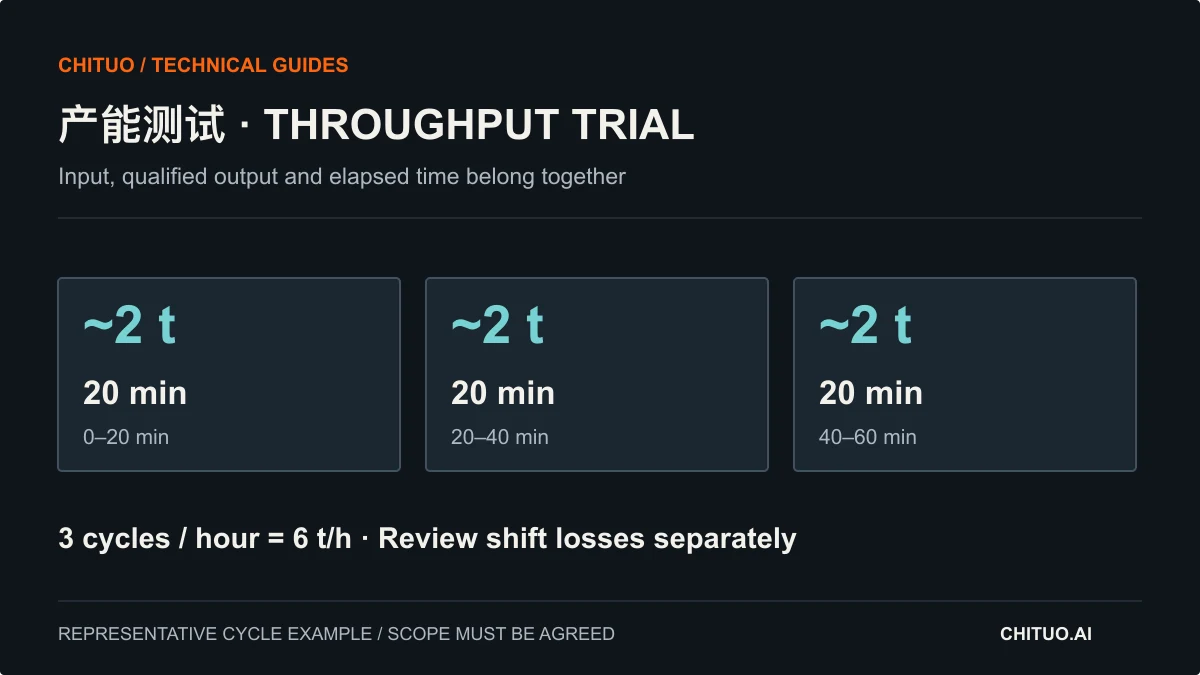
A tonnes-per-hour figure is useful when the trial conditions are clear. A few long pieces and many short pieces can require different numbers of cuts, sorting movements and changeovers. Compare equipment against the same representative task.
Agree on the trial scope
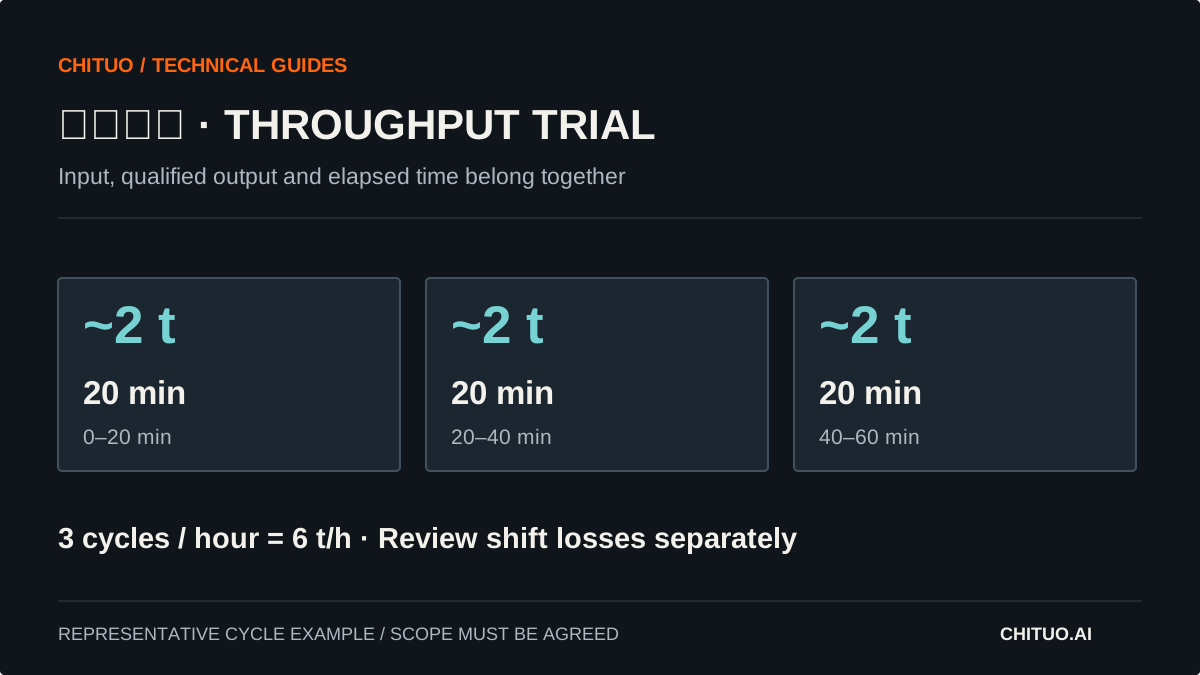
The 20-minute cycle reflects the project’s confirmed representative operating description. It does not establish the same speed for every cut list.
| Item | Agree before the trial |
|---|---|
| Material | Grade, diameter, stock length, count and weight basis |
| Task | Cut lengths, quantities, cutting method and destination |
| Timing | The starting action and the completion point |
| Qualified output | Measurement method, accepted count and weight |
| Interruptions | Loading, changeovers, unloading waits and recovery |
Separate cycle rate from shift output
Chituo’s confirmed representative description is approximately two tonnes processed in 20 minutes, equivalent to 6t/h for that scope. Confirmed pickup examples are 15 bars per cycle for 12mm rebar and two for 32mm rebar. Establish other pickup counts for the configuration offered.
State whether the timing includes crane waits and unloading. Record input and qualified output separately. Material entering the line is not automatically finished product delivered.
Include a representative changeover
Record operator tasks, preparation and first-piece checks during a typical diameter change. Use the actual operating calendar and order mix to estimate shift output rather than extending a short continuous-production rate across every working hour.
Scan the WeChat QR code to chat with us anytime
Run our Triple-Optimization Calculator with your bar list, or scan the WeChat QR code / call us directly for a tailored bay layout and quotation.